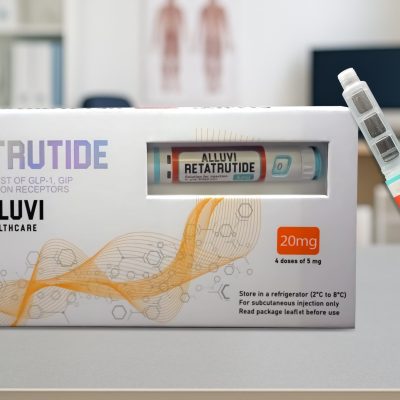
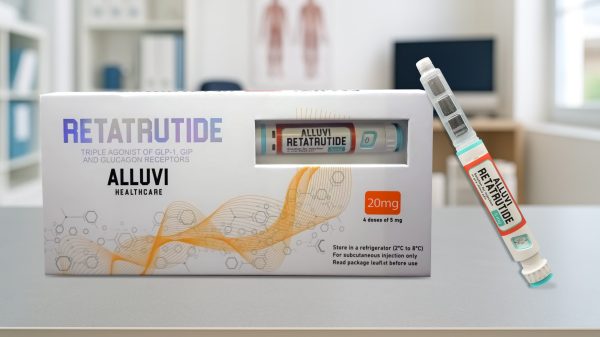
Buy Retatrutide 20mg Research Compound | Third-Party Tested, In-Vitro Use Only
Triple-receptor agonism is the single biggest shift in metabolic peptide research in over a decade — and Retatrutide 20mg sits at the center of it. Across Eli Lilly’s Phase 3 TRIUMPH program, participants on the highest studied doses lost an average of 30% of body weight over 104 weeks in controlled trial settings. That’s not a marketing number. That’s a published clinical result, and it’s why Retatrutide 20mg has become one of the most requested compounds in metabolic and endocrine research labs worldwide.
If you’re sourcing Retatrutide 20mg for laboratory work, formulation studies, or in-vitro receptor research, here’s what the compound actually is, what the data shows, and what to look for before you buy.
What Retatrutide Is and Why Labs Are Studying It
Retatrutide (developmental code LY3437943) is a 39-amino-acid peptide engineered to activate three separate metabolic receptors at once: GLP-1, GIP, and glucagon. No other compound currently in clinical development hits all three pathways simultaneously, which is what makes it such a distinct research subject compared to single or dual agonists like semaglutide or tirzepatide.
It’s currently in Phase 3 trials sponsored by Eli Lilly, covering obesity, type 2 diabetes, knee osteoarthritis linked to excess weight, and cardiovascular/kidney outcomes. It has not received FDA or EMA approval for any indication. Research suppliers offering Retatrutide for sale market it strictly for laboratory and in-vitro applications — not for human or animal administration — and any reputable source will say so plainly on the label.
Demand for this compound among research institutions has climbed sharply since 2025, tracking closely with the release of each new TRIUMPH trial readout. Labs studying multi-receptor agonism, appetite-regulation pathways, or comparative incretin pharmacology are the primary buyers.
Product Specifications
| Attribute | Detail |
|---|---|
| Compound | Retatrutide (LY3437943) |
| Vial strength | 20mg |
| Form | Lyophilized powder, sealed research vial |
| Molecular class | Triple GLP-1 / GIP / glucagon receptor agonist |
| Amino acid length | 39 residues |
| Purity standard | ≥98%, third-party HPLC/MS verified |
| Intended use | In-vitro laboratory research only |
| Storage (unreconstituted) | 2–8°C, protected from light |
| Regulatory status | Investigational; not FDA/EMA approved |
The Science: How Triple-Receptor Agonism Works
Most incretin-based research compounds work on one or two pathways. Retatrutide’s distinguishing feature is a third mechanism layered on top of the familiar GLP-1/GIP framework.
GLP-1 Receptor Activity
Retatrutide binds the GLP-1 receptor with potency comparable to dedicated GLP-1 agonists, driving delayed gastric emptying and appetite-signal modulation — the same pathway that underlies semaglutide’s effects, but as one of three simultaneous mechanisms rather than the sole target.
GIP Receptor Activity
The GIP component potentiates glucose-dependent insulin secretion, mirroring the dual-agonist activity seen in tirzepatide research. In trial models, this pathway contributes to the glycemic improvements observed alongside weight change.
Glucagon Receptor Activity — the Differentiator
This is the piece no other clinical-stage compound currently replicates. Glucagon receptor agonism appears to increase energy expenditure — meaning part of retatrutide’s effect in research models comes from raising metabolic rate, not just suppressing intake. This is the mechanism researchers cite most often when comparing it to earlier-generation incretin compounds.
How to Use Your Retatrutide Injection Pen
Step 1: Wash Your Hands
Thoroughly clean your hands with soap and water to ensure a sterile environment before handling the pen or needle.
Step 2: Prepare the Pen
Remove the pen cap and check the medication. Ensure the solution is clear and free of particles. Select a new needle and peel off the paper tab.
Step 3: Attach the Needle
Align the needle with the top of the pen and twist it on firmly until secure. This ensures a proper seal for safe injection.
Step 4: Prime the Pen
Turn the dose knob to select a small dose (as instructed). Hold the pen upright and press the injection button to release air bubbles and prepare the flow.
Step 5: Select Your Dose
Use the dose knob to select the correct dose as prescribed. Confirm the dose is visible in the dose window.
Step 6: Choose an Injection Site
Recommended areas are the stomach (at least 2 inches from the belly button), thigh, or back of the upper arm. Rotate injection sites weekly.
Step 7: Inject the Dose
Insert the needle into your skin at a 90-degree angle. Press the injection button fully and hold for 5–10 seconds to ensure the full dose is delivered. Then, carefully remove and discard the needle in a sharps container.
How to Dose
If you are using Retatrutide for the first time, it is important to follow a gradual dosing plan. This helps your body adjust and reduces side effects.
Recommended Dosing Schedule:
Weeks 1–4: 2.5mg once weekly
Weeks 5–8: 5mg once weekly
Weeks 9–12: 7.5mg once weekly
Weeks 13 onward: 10mg once weekly
However, dosing should be guided by your body’s response — especially appetite suppression.
If your appetite remains well-suppressed on a lower dose (e.g. 2.5mg), you may remain on that dose longer (e.g. 6+ weeks) until appetite control begins to fade, then step up to the next dose.
Always allow your body to guide your progression. Only increase your dose when appetite suppression begins to fade.
Dose by Clicks (Dial Setting):
2.5mg = Turn the dial 30 clicks
5mg = Turn dial to 60 clicks
You should inject once weekly on the same day each week. Ensure the correct dose is shown in the pen’s display window before injecting.
Retatrutide vs. Semaglutide vs. Tirzepatide: Research Comparison
| Compound | Receptors Targeted | Best Reported Weight Reduction | Development Stage (2026) |
|---|---|---|---|
| Semaglutide | GLP-1 only | ~15% (STEP trials) | FDA approved |
| Tirzepatide | GLP-1 + GIP | ~20-22% (SURMOUNT trials) | FDA approved |
| Retatrutide | GLP-1 + GIP + Glucagon | Up to 30% (TRIUMPH-1) | Phase 3, investigational |
For researchers running comparative incretin studies, this three-way mechanistic spread is exactly why Retatrutide 20mg gets requested alongside semaglutide and tirzepatide reference standards.
Why Source Retatrutide From a Verified Research Supplier
| Quality Marker | Why It Matters |
|---|---|
| Third-party HPLC/MS testing | Confirms purity and identity before it reaches your bench |
| Certificate of Analysis per batch | Traceability for reproducible research results |
| Cold-chain shipping | Preserves peptide stability from dispatch to delivery |
| Sealed, tamper-evident vials | Prevents contamination prior to first use |
| Clear “research use only” labeling | Regulatory compliance and liability clarity for your institution |
When you buy Retatrutide 20mg for laboratory use, purity documentation isn’t optional — degraded or under-dosed material is one of the most common causes of irreproducible results in peptide research, and it’s avoidable by sourcing from suppliers who publish batch-specific testing.
Storage and Handling for Laboratory Use
| Condition | Requirement |
|---|---|
| Unreconstituted (lyophilized) | Store 2–8°C, protected from light; do not freeze |
| Reconstituted solution | Use within manufacturer-specified stability window; refrigerate between uses |
| Transport | Cold-chain shipment with cold pack strongly recommended |
| Long-term storage | Freezer storage (-20°C) acceptable for extended shelf life prior to reconstitution, per most supplier COAs |
FAQs About Retatrutide 20mg
1. What is Retatrutide 20mg used for in research? It’s used primarily in metabolic and endocrine research to study triple-receptor agonism — how simultaneous activation of GLP-1, GIP, and glucagon receptors affects appetite signaling, glucose metabolism, and energy expenditure in experimental models.
2. How is Retatrutide different from semaglutide and tirzepatide? Semaglutide targets one receptor (GLP-1), tirzepatide targets two (GLP-1 and GIP), and Retatrutide is the only compound in late-stage development targeting all three, including glucagon — the pathway linked to increased energy expenditure in trial data.
3. Is Retatrutide FDA approved? No. As of 2026, Retatrutide is in Phase 3 clinical trials and has not received FDA approval, though published Phase 2 data has shown strong results relative to other compounds in its class.
4. What does the clinical trial data show for weight reduction? Phase 3 TRIUMPH-1 data showed weight reduction ranging from 17.6% at the 4mg dose to 25.0% at 12mg over 80 weeks, with select participants reaching up to 30% reduction by 104 weeks.
5. What purity should I expect from research-grade Retatrutide? Reputable suppliers test to ≥98% purity via HPLC/MS and provide a batch-specific Certificate of Analysis. Always request this documentation before use in any study.
6. How should Retatrutide 20mg be stored before use? Lyophilized vials should be kept refrigerated at 2–8°C, away from light, and never frozen after first exposure to room temperature.
7. What side effects were reported in clinical trials? Gastrointestinal effects were most common — nausea, diarrhea, vomiting, and appetite suppression — typically mild to moderate and concentrated during dose-escalation phases of the studies.
8. Is Retatrutide 20mg the same compound as LY3437943? Yes. LY3437943 is Eli Lilly’s developmental code name for the same triple-agonist molecule marketed in research circles as Retatrutide.
9. Which trials are currently studying Retatrutide? Ongoing Phase 3 programs include TRIUMPH-1 (obesity), TRIUMPH-2 (type 2 diabetes with obesity), TRIUMPH-4 (obesity with knee osteoarthritis), TRANSCEND-T2D (versus semaglutide), and TRIUMPH-Outcomes (cardiovascular and kidney outcomes).
10. Why do researchers compare Retatrutide to tirzepatide specifically? Because tirzepatide is the closest existing approved compound mechanistically — both hit GLP-1 and GIP — making Retatrutide’s added glucagon activity the clearest variable to isolate in comparative studies.
11. Where can I buy Retatrutide 20mg for research purposes? Source it only from suppliers who provide third-party purity testing, batch-specific Certificates of Analysis, and clear research-use-only labeling — and who ship cold-chain to preserve compound stability in transit.


Reviews
There are no reviews yet.