
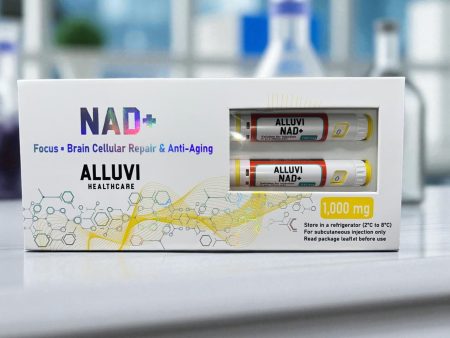
Buy Quality NAD+ 1000mg Research Compound | Third-Party Tested, In-Vitro Use Only
A steep, age-related decline in NAD+ now ranks among the most reproducible molecular signatures of human aging — implicated in metabolic slowdown, mitochondrial dysfunction, DNA-repair deficits, and chronic inflammation across more than 60 peer-reviewed studies. NAD+ 1000mg supplies this coenzyme in a high-strength, sealed research format built for laboratories studying cellular energy metabolism, DNA repair pathways, and aging biology.
If your lab is investigating mitochondrial function, NAD+ precursor pathways, or comparative aging research, here’s what NAD+ 1000mg is, what the current literature shows, and what to check before you buy.
A Central Coenzyme in Aging and Metabolism Research
Nicotinamide adenine dinucleotide (NAD+) is not a vitamin or hormone — it’s a coenzyme present in every living cell, essential to the processes that keep cells alive, functional, and capable of repair, playing a central role in mitochondrial ATP production. Recent research has expanded understanding of NAD+’s role in cellular energy generation, redox reactions, and signaling pathways that regulate healthspan and aging.
This is a Limited Stock Release kit supplying 1,000mg total NAD+ across two sealed 500mg research devices, formulated for laboratory stability analysis, formulation studies, and delivery-mechanism evaluation. NAD+ is not a prescription medicine and is supplied strictly for research applications — not for human or veterinary consumption.
Specifications
| Attribute | Detail |
|---|---|
| Compound | NAD+ (Nicotinamide Adenine Dinucleotide) |
| Kit contents | 2 × pre-filled research devices (500mg each) |
| Total compound per kit | 1,000mg NAD+ |
| Dose increments per device | Configurable in 25mg, 50mg, 75mg, or 100mg research units; 5 × 100mg draws per device |
| Form | Sealed liquid, pre-filled research device |
| Intended use | In-vitro / preclinical laboratory research only |
| Storage (unopened) | 2–8°C, refrigerated; do not freeze |
| Regulatory status | Not a prescription medicine; supplied for research use only |
The Science: How NAD+ Functions at the Cellular Level
Cellular Energy Production
NAD+ is a cellular coenzyme that plays an essential role in metabolic and signaling reactions, participating in redox reactions that lead to ATP formation. NAD+ directly and indirectly affects numerous cellular processes, including metabolic pathways, DNA repair, and immune cell activity, all critical for maintaining cellular homeostasis.
DNA Repair and Aging Biology
A growing body of evidence identifies declining cellular NAD+ as a feature of aging, with NAD+ acting as a co-substrate for enzymes involved in pathways that modify the aging process. This age-related NAD+ decline is now considered one of the most reproducible molecular signatures of human aging, linked to mitochondrial dysfunction, DNA-repair deficits, and stem-cell fatigue.
Precursor Pathway Research
NAD+ biosynthesis intermediates, including nicotinamide riboside (NR) and nicotinamide mononucleotide (NMN), have become a major focus of NAD+ biology research, with supplementation studies of either precursor shown to raise NAD+ levels during aging. Direct NAD+ administration research runs alongside precursor-based approaches as researchers compare biosynthetic pathway efficiency and downstream cellular effects.
Research Data: What the Published Literature Shows
| Research Area | Study Type | Key Reported Finding |
|---|---|---|
| Aging biomarkers | Multi-study review (60+ papers) | NAD+ decline linked to metabolic slowdown, mitochondrial dysfunction, DNA-repair deficits |
| Neurodegeneration | Nature Aging expert review, 25+ scientists | NAD+ highlighted as a potential support pathway relevant to Alzheimer’s and Parkinson’s research |
| Human clinical evidence | Nature Metabolism review, 2025 | Age-related NAD+ decline confirmed in limited human studies; precursor supplementation trials show variable efficacy |
| Skin cell research | Human fibroblast study, Oct. 2025 | NAD+ precursors linked to collagen restoration, DNA repair activation, and wound-healing response in stressed skin cells |
| Ovarian aging research | Mechanistic review | NAD+ decline associated with age-related functional degeneration in reproductive tissue models |
A 2026 expert review published in Nature Aging, combining insight from more than 25 scientists including clinicians and aging-biology researchers, highlighted NAD+’s central role in energy production, DNA repair, and cellular function, with relevance to research on Alzheimer’s and Parkinson’s disease. However, a 2025 Nature Metabolism review notes that while preclinical studies support NAD+ precursor supplementation as a promising research strategy, human clinical trials to date have shown limited and inconsistent efficacy — underscoring why continued laboratory-stage research remains necessary.
Why Source NAD+ From a Verified Research Supplier
| Quality Marker | Why It Matters |
|---|---|
| pH-buffered formulation | Reduces compound degradation and supports formulation stability studies |
| Third-party purity testing | Confirms identity and concentration before use in any protocol |
| Sealed, fixed-volume devices | Supports consistent, reproducible laboratory measurement |
| Cold-chain shipping | Preserves coenzyme stability from dispatch to delivery |
| Certificate of Analysis per batch | Traceability for reproducible research findings |
When you buy NAD+ 1000mg for laboratory use, formulation quality matters more than with many peptides — NAD+ is naturally acidic and prone to degradation if improperly buffered, which can directly affect research reproducibility. Look for suppliers who disclose their buffering and stability methodology.
Storage and Handling for Laboratory Use
| Condition | Requirement |
|---|---|
| Unopened research device | Store 2–8°C, refrigerated; do not freeze |
| Transport | Cold-chain shipment with cold pack strongly recommended |
| Handling | Sealed, fixed-volume format designed for controlled laboratory measurement |
| Disposal | Dispose of used devices and sharps per standard laboratory biohazard protocol |
FAQs About NAD+ 1000mg
1. What is NAD+ used for in research? NAD+ is studied for its role in cellular energy production, DNA repair, redox signaling, and its connection to aging biology, mitochondrial function, and neurodegenerative disease research.
2. Why is NAD+ called a “master molecule”? NAD+ is often described as a cell’s fuel regulator because it plays a central role in producing energy, repairing DNA, and keeping cells functioning properly.
3. How does NAD+ relate to aging research? A steep, age-related decline in NAD+ is considered one of the most reproducible molecular signatures of human aging, associated with mitochondrial dysfunction, DNA-repair deficits, and chronic inflammation.
4. What’s the difference between NAD+ and precursors like NMN or NR? NMN and NR are biosynthetic precursors that the body converts into NAD+, while direct NAD+ research examines the coenzyme itself rather than its upstream building blocks.
5. Is there strong human clinical evidence for NAD+ supplementation? Human clinical trials on NAD+ precursor supplementation have shown limited and inconsistent efficacy to date, even though preclinical studies support it as a promising area of continued research.
6. Why does NAD+ require pH buffering? NAD+ is naturally acidic in solution, which can cause formulation instability and degradation if not properly buffered — a key variable in stability and delivery-mechanism research.
7. What does research say about NAD+ and neurodegenerative disease? A recent international expert review has highlighted growing research interest in how NAD+ may support healthier aging and relate to conditions such as Alzheimer’s and Parkinson’s disease.
8. Is NAD+ a prescription medicine? No. This product is not a prescription medicine and is supplied strictly for laboratory research applications.
9. How should NAD+ 1000mg be stored? Keep the sealed research devices refrigerated at 2–8°C and never freeze them. Ship and store cold-chain to preserve coenzyme stability.
10. Where can I buy NAD+ 1000mg for research purposes? Source it from suppliers who disclose pH-buffering methodology, provide third-party purity testing, and ship cold-chain with a batch-specific Certificate of Analysis.

Reviews
There are no reviews yet.